Kidney Stone Laser Treatment
Kidney stones can cause sudden, intense pain, urinary discomfort and sometimes complications if they obstruct the urinary tract. At Medithics Superspeciality Care, kidney stone treatment is planned according to the stone’s size, location, number and the patient’s overall health.
From medical management for suitable small stones to advanced procedures such as RIRS, URSL, PCNL, our urology team evaluates each case and recommends the most appropriate treatment.
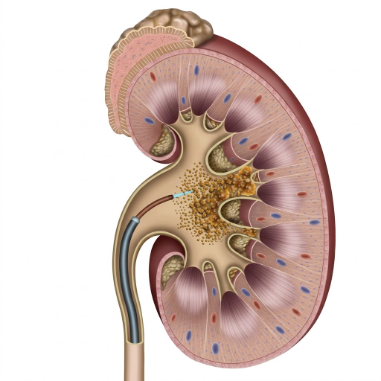

Treatment Starts With Right Diagnosis.
A proper evaluation helps determine the location, size and characteristics of a kidney stone and whether RIRS is an appropriate treatment option.
Dr. Sudarshan Kanti Baishya
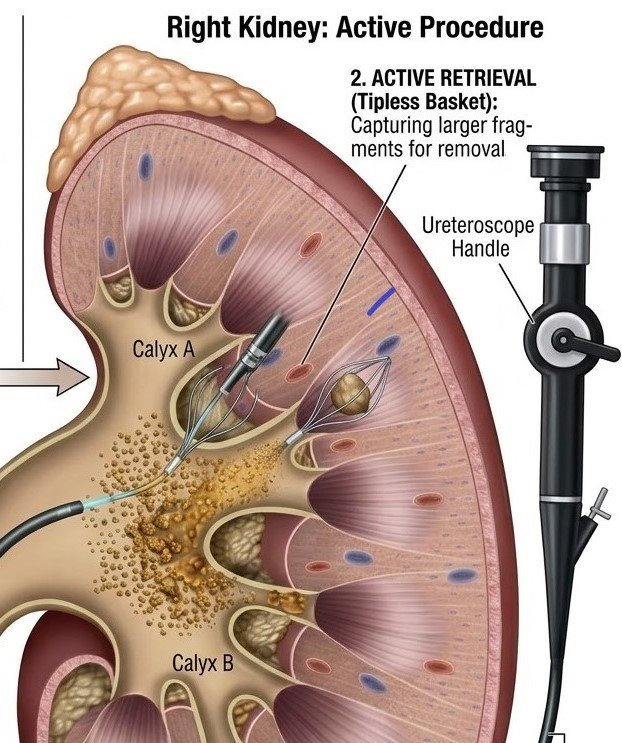
What is Kidney Stone Laser Surgery?
Kidney Stone Laser Surgery which is also known as lithotripsy is an minimally invasive process used for breaking the kidney stone into smaller pieces which will be then passed out of the body through urination.
During the procedure, a thin scope is passed through the urinary passage, and a laser is used to break the stone into smaller fragments that can be removed or passed naturally. The choice of treatment depends on the size, location, and number of stones, as well as the patient’s overall health.
- Accesses the kidney through the natural urinary passage
- Uses a flexible scope to locate the stone
- Laser technology can fragment selected stones
- Does not require an external skin incision
- DJ stent may be used when clinically required
Who Can Benefit from Laser Stone Removal Surgery?
Deciding on the right medical procedure always requires a personalized clinical evaluation with a specialist. Urologists typically recommend laser stone removal for patients facing the following specific challenges-
Stubborn Stones
Kidney stone is securely lodged and shows no signs need active treatment.
Specific Size Constraints
Laser Kidney Stone Removal Surgery is performed as per the size & location.
Presence of Multiple Stones
Flexible endoscopic method can often target and treat multiple fragments during a single procedural plan.
Complex Anatomical Placement
The flexible nature of the Laser Kidney Stone Surgery scope allows surgeons to navigate difficult stone locations.
Unsuccessful Prior Treatments
Laser Kidney Stone Surgery can be considered when previous surgery failed.
Severe Blockages and Pain
Significant urinary construction need careful intervention by specialist.
When Should You Consult an urologist?
Kidney stones can sometimes remain silent, particularly when they are small. Kidney Laser Treatment is an advanced technique and reduces the risk of excess pre & post-surgery complications as well as infection.
Get Your Kidney Stone EvaluateSymptoms of Kidney Stones need closer attention
Kidney Stone Treatment
Laser Kidney Stone Treatment follows a planned process starting from reviewing patient history to stone fragmentation & post-operative care.
Is Laser Kidney Stone Removal Surgery right for your kidney stone?
Get your reports reviewed and discuss your symptoms, stone size and treatment options with our urology team.
What Happens During Kidney Stone Surgery?
From admission to recovery, Medithics Superspeciality Care take care of your overall surgery process under one roof within 24 hours.
Hospital Admission
From Patient Arrival to registration & checking of vital signs
Pre Surgery Preparation
Final stone evaluation to preparation of surgical area.
Anesthesia Given
Taking patient to OT & administration of general Anesthesia
Surgery Begin
Thin scope guided to the location to apply laser energy for stone breaking. If required temporary ureteral stent can be placed.
Post-surgery Care
Monitoring, Discharge planning & Follow Up
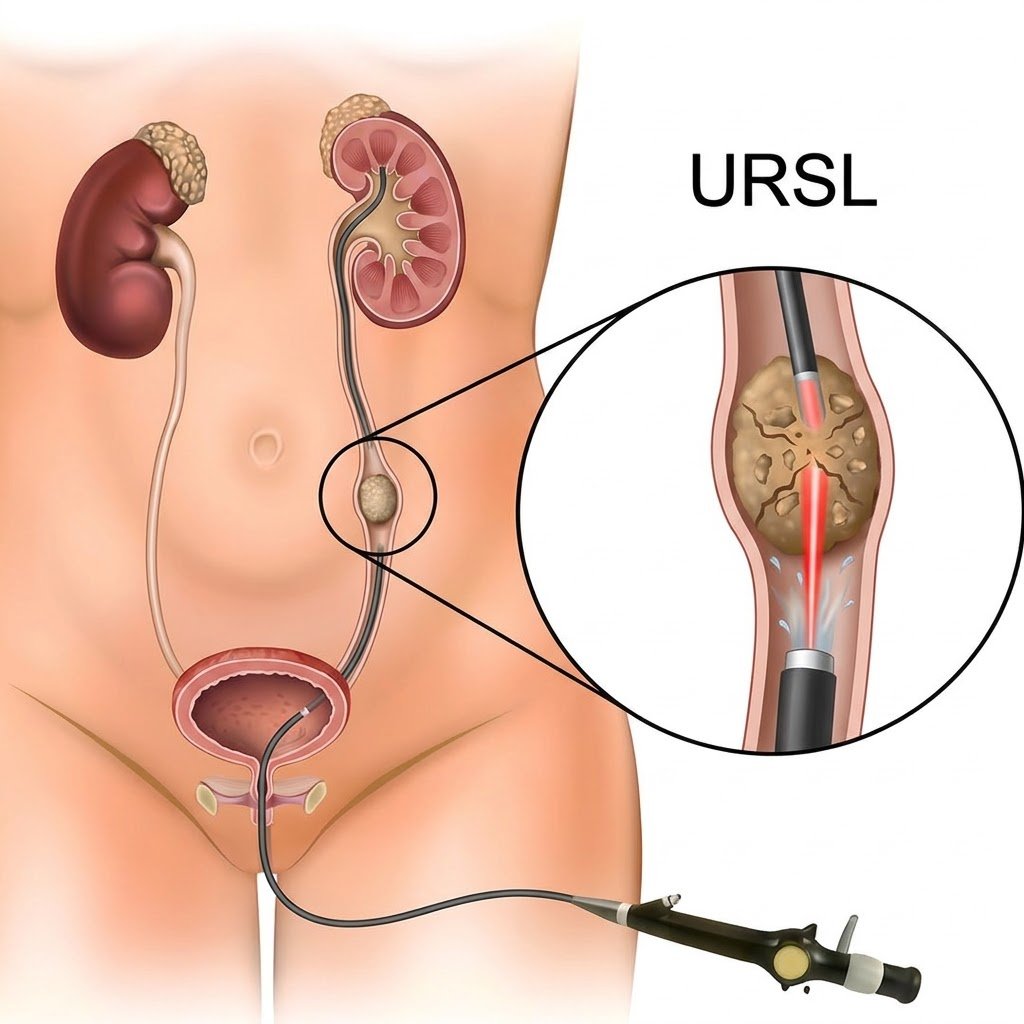
URSL (Ureteroscopic Lithotripsy) For Ureter Stones
Route: Urinary passage → Ureter
In URSL, the procedure is performed through the natural urinary passage, so there is usually no external cut. After the general anaesthesia, a thin long fiber-optic ureteroscope is gently guided through the urinary passage into the ureter, where the stone is located.
Once the stone is clearly seen, laser energy is used to break it into smaller fragments. The pieces may then be removed with specialised instruments or allowed to pass naturally through urine. Depending on the condition of the ureter, a temporary stent may also be placed to help urine flow during healing.
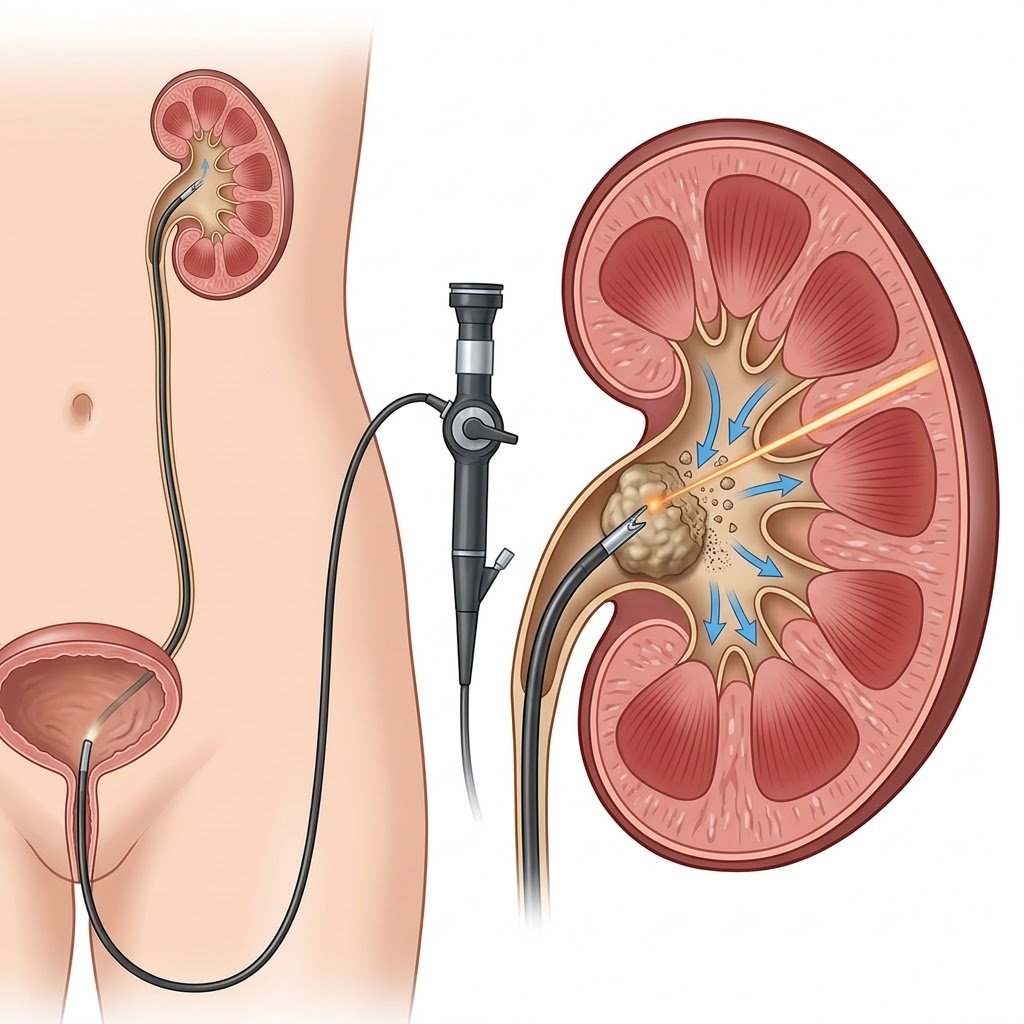
RIRS (Retrograde Intrarenal Surgery) For Kidney Stones
Route: Urinary passage → Ureter → Kidney
RIRS is designed to reach stones located inside the kidney through the natural urinary passage. Before the beginning of the surgery process, administration of spinal or general anaesthesia is given. A thin flexible endoscope is carefully guided through the urinary passage by retrograde manner until it reaches the kidney. Because the scope is flexible, it can move into different areas of the kidney to locate the stone. A laser is then used to break the stone into very small fragments or dust. The larger fragments can be removed, while very small particles may pass naturally with urine. A temporary flexible stent may be placed after the procedure when required.
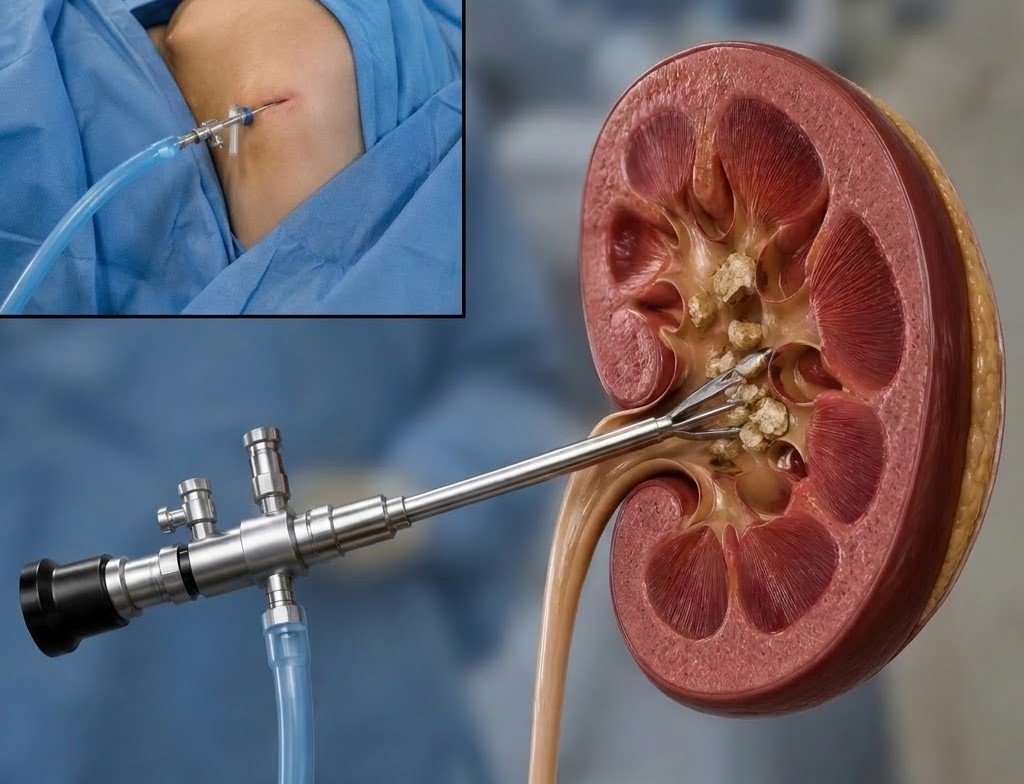
PCNL (Percutaneous Nephrolithonomy) For Large/Complex Kidney Stones
Route: Small opening through the back → Kidney
PCNL takes a different route from URSL and RIRS. Instead of entering through the urinary passage, the surgeon creates a small access through the patient’s back directly into the kidney. After anaesthesia, this access is carefully established under imaging guidance.
A thin needle may be applied for accessing the urinary system and dilate the route. The whole process is assisted by applying a guidewire that allow the nephroscope to access the different parts of the kidney.
Specialised instruments are then introduced through this small opening to reach and break the kidney stone. The broken pieces can be removed directly through the same passage. This approach is particularly useful when the stone burden is large or complex and a more direct method of stone removal is required.
Benefits of Laser Kidney Stone Removal Surgery
Laser kidney stone removal is a minimally invasive approach that uses a thin scope and laser technology to break and clear stones through the urinary passage.
No Major Surgical Cut
The procedure is performed through the natural urinary passage, avoiding a large external incision.
Precision Laser Treatment
A focused laser breaks the kidney stone into smaller fragments for easier clearance.
Targeted Stone Removal
The surgeon can directly locate and treat the stone using a specialised endoscope.
Recovery-Oriented Approach
Less invasive treatment may help suitable patients return to their routine sooner.
Your Stone Treatment Is Done. Recovery Comes Next.
After laser kidney stone treatment, proper aftercare can support a smoother recovery and help reduce the chance of future stone problems.
Talk to Our Urology TeamChoose Recovery-Friendly Foods
Start with light meals and gradually return to your regular diet as advised by your urologist.
Keep Fluids in Balance
Drink enough water to maintain good urine flow, unless your doctor has advised fluid restriction.
Give Your Body Time
Take prescribed medicines and avoid strenuous exercise until your doctor says it is safe.
Don’t Miss Your Review
Attend the scheduled visit so your recovery can be properly assessed.
Laser Kidney Stone Removal Surgery FAQs
Answers to common questions about the procedure, recovery and after-care.
No, you will not have any visible scars.
Your urologist will decide during the surgery if a stent is necessary to keep the urinary channel open, prevent pain from post-operative swelling, and help the tiny stone fragments wash out smoothly.
In the days immediately following your surgery, it is best to stick to meals that are light and easily digestible.
Generous hydration is one of the most critical steps for flushing out the residual stone dust.
Your medical team will analyze the exact size, density, and location of your stone, alongside your internal urinary anatomy, to confirm if this specific endoscopic laser approach is the safest.
Real People. Real Care Journeys.
Stories of trust, care and better health.

“Returning to the path of recovery”
Dr Debnarayan Mukhopadyay Treated for Heart Blockage
“Here are their stories of recovery.”
Syamapada Mandal Treated for Prostate Surgery