
Dr. Debashis Adhikary
MBBS, MS – Orthopaedics | Orthopedic surgeon
20+ Years Experience
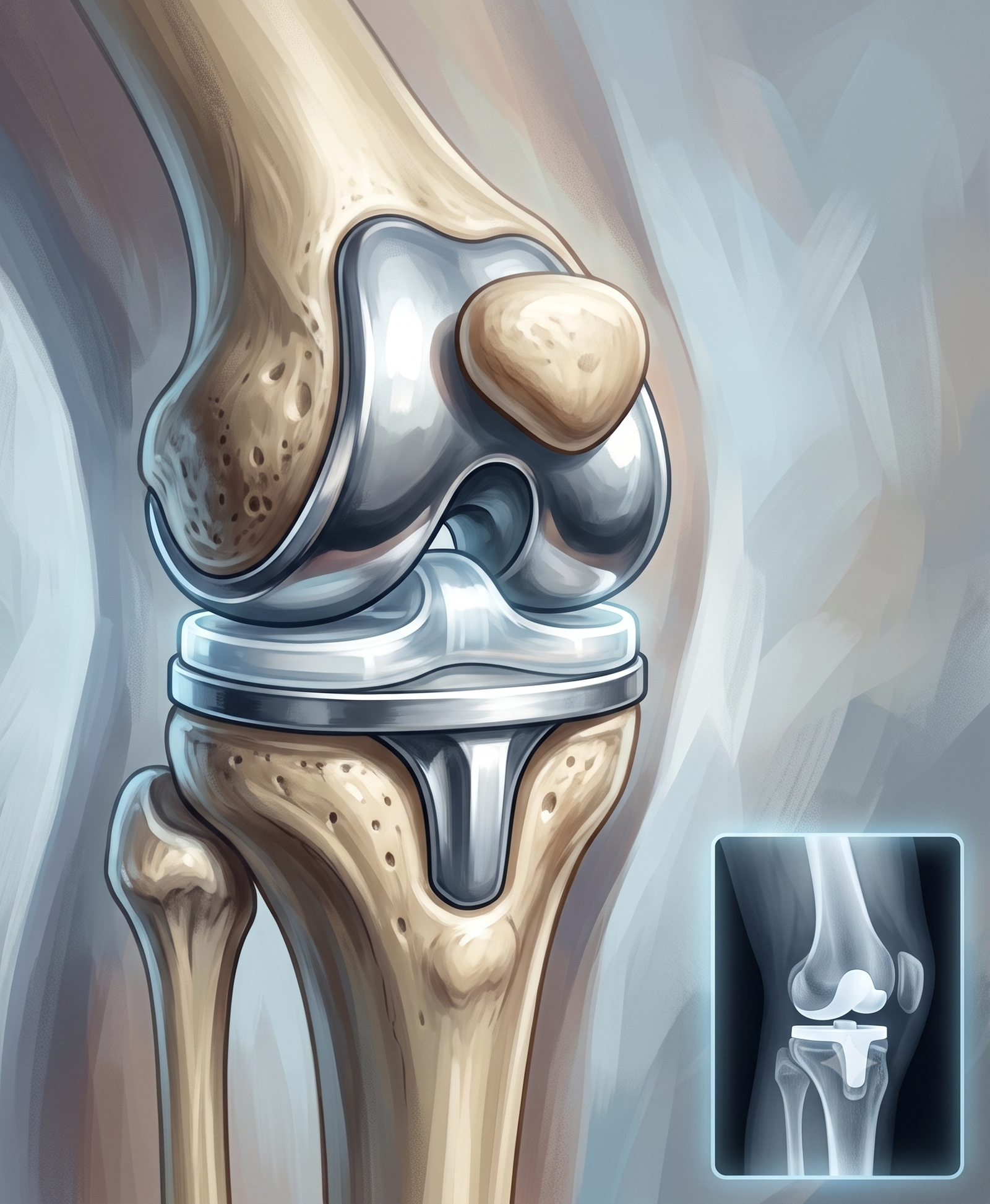
Total Knee Replacement or TKR is a surgical treatment for a severely damaged or worn knee joint. During the procedure, the damaged joint surfaces are replaced with specially designed artificial components to help reduce pain and improve knee movement.
If persistent knee pain, stiffness or difficulty walking is affecting your everyday activities, our team will guide you in every process & will connect an Orthopaedic specialist. With our compassionate & guided approach, we will assess your knee condition and determine whether Total Knee Replacement may be appropriate for you.
A proper evaluation helps determine the severity of the damage or injury for better treatment plan.
MBBS, MS – Orthopaedics | Orthopedic surgeon



MBBS, MD (PGT), MPT (Ortho), DFM (Medicine) (Govt. Medical Oficer, General Physician)

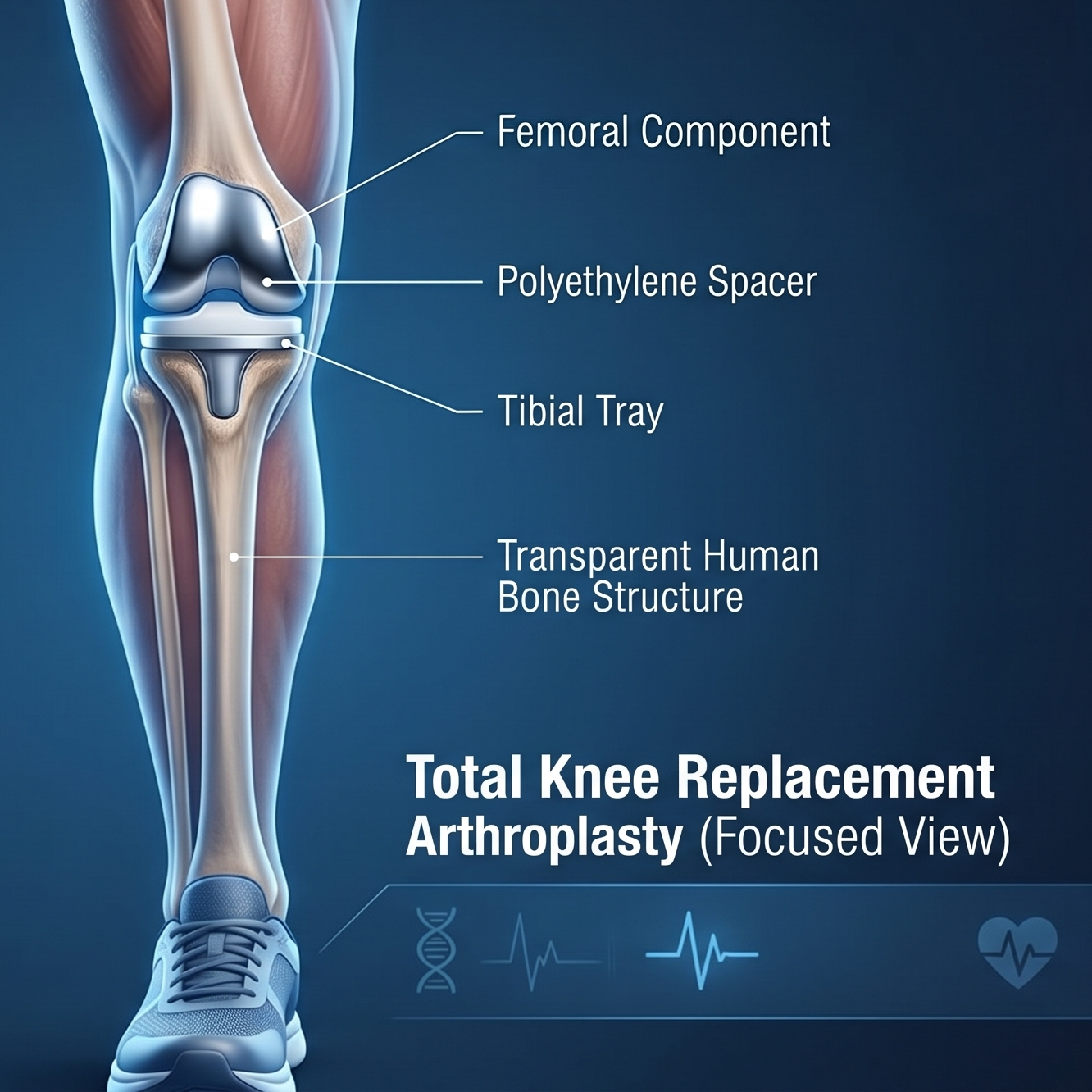
Total Knee Replacement, also known as Total Knee Arthroplasty, is a surgical procedure used when the knee joint has become significantly damaged and conservative treatments are no longer providing adequate relief.
During surgery, the damaged surfaces of the knee joint are carefully removed and replaced with artificial components designed to restore joint movement and stability.
The procedure is planned according to the patient’s knee condition, bone structure, activity level and overall health.
Not every patient with knee pain requires replacement surgery which may be considered when significant joint damage causes persistent symptoms and affects everyday movement.
Severe joint wear causes persistent pain and stiffness.
Continuous pain irrespective of medicine.
Knee problems affecting mobility.
Stiffness makes bending or straightening difficult.
Advanced deterioration of the knee joint.
Difficulty in managing everyday actions.
Ongoing knee pain should not always be considered a normal part of ageing. Persistent symptoms can progressively affect walking, movement and everyday independence.
A assessment by orthopaedic specialist can help identify the underlying cause and determine whether non-surgical treatment or knee replacement may be appropriate.
Implant Variations That Applied In TKR
This is the most popular kind of implant, in which the tibial component is connected to a plastic spacer that supports the metal femoral component. It has the longest safety and implants longevity record and is the least priced.
This is a ceramic femoral component is supported by a plastic spacer for people who are sensitive to specific metals.
The ceramic used to make the tibial and femoral components may squeak when the patient walks, but it is less likely to induce bodily reactions.
Metal makes up both the tibial and femoral components. Because of worries about metal traces seeping into the bloodstream, this variety is less frequently utilized.
Every knee replacement procedure begins with careful assessment and continues through structured surgical and rehabilitation care.
Persistent knee pain can make simple everyday activities difficult. Get your knee evaluated by an Orthopaedic specialist to understand your treatment options.
From initial evaluation to rehabilitation, each stage of treatment is planned around your safety, mobility and recovery.
Patient Arrival, Admission & Assessing of medical history.
Test Confirmation & pre-surgical evaluation.
Spinal Anaesthesia administration & cleaning of knee.
From incision to implantation of metal & high-grade plastic prosthetic & alignment checking.
Early movement observation to discharge with follow-up date.
For appropriately selected patients with advanced knee joint damage, replacement surgery can address the damaged joint surfaces and support improved mobility.
Aims to reduce pain caused by severe joint damage.
Supports better movement for treated knee.
Helps restore functional movement.
Helps in routine activities with appropriate rehabilitation.
Recovery does not end with surgery. Rehabilitation, physiotherapy and regular follow-up play an important role in regaining knee movement and strength.
Speak With Our Post-Operative Care TeamIntroduction to the progressive physiotherapy alignment with recovery.
Resuming of daily activities as advised.
Post-operative guidance for comfortable recovery.
Regular reviews & follow up.
Answers to common questions about knee replacement, recovery and after-care.
After Total Knee Replacement (TKR), your diet should support healing, muscle recovery, bone health, and healthy body weight and you should include protein, calcium rich diet.
It may be considered when severe knee joint damage causes persistent pain, stiffness or functional limitations and other treatment options are no longer providing sufficient relief.
No. The need for knee replacement depends on the extent of joint damage, symptoms, mobility, imaging findings, overall health and response to previous treatment.
Recovery varies between patients. Early movement usually begins soon after surgery, while strength, mobility and functional recovery continue progressively with rehabilitation.
Walking is generally started early under medical and physiotherapy guidance. The exact timeline depends on your surgery, health condition and recovery progress.
Choose the consultation option that works best for you.