
Dr. Debashis Adhikary
MBBS, MS – Orthopaedics | Orthopedic surgeon
20+ Years Experience
A meniscus tear is an injury to the cartilage that sits between the thigh bone and shin bone inside the knee. The meniscus helps distribute load across the joint and contributes to knee stability during movement.
A tear may occur after a sudden twisting injury, sports activity, awkward landing or gradual age-related changes in the knee. Timely orthopaedic assessment can help determine the location and severity of the tear and proper treatment approach.
A proper evaluation helps determine the severity of the damage or injury for better treatment plan.
MBBS, MS – Orthopaedics | Orthopedic surgeon



MBBS, MD (PGT), MPT (Ortho), DFM (Medicine) (Govt. Medical Oficer, General Physician)

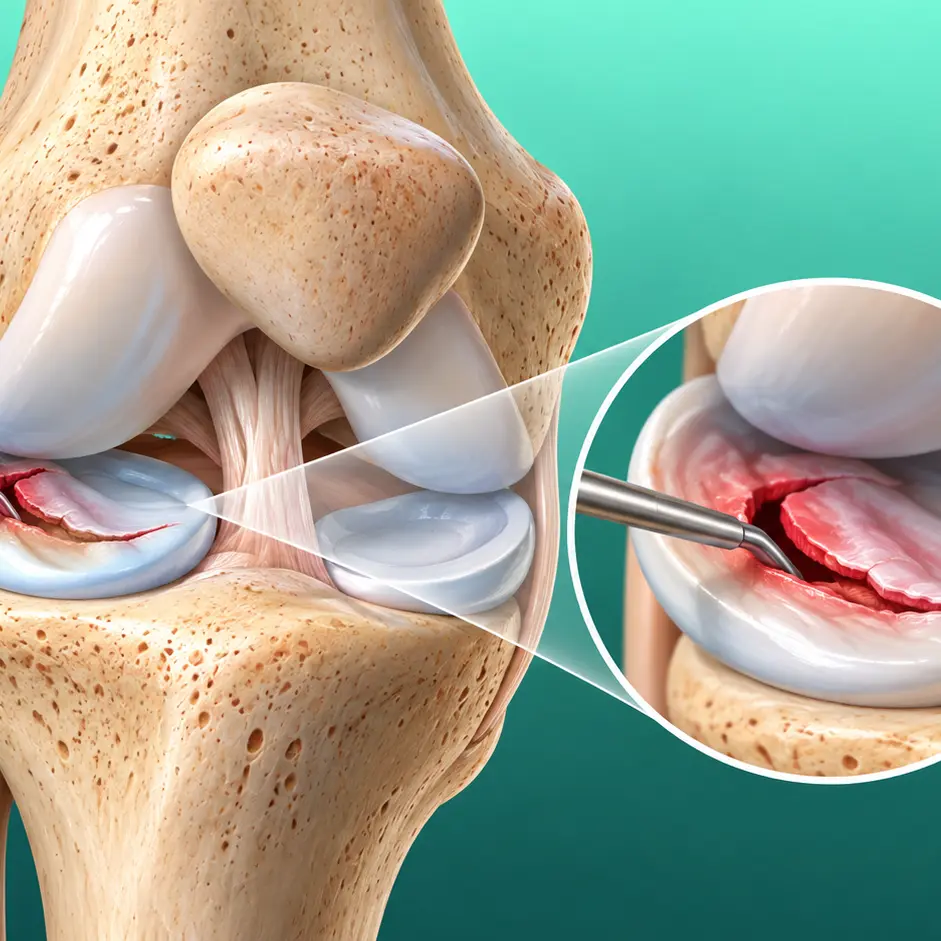
The meniscus is a specialised cartilage structure inside the knee that helps cushion the joint and distribute forces between the femur and tibia. A meniscus tear occurs when this cartilage is damaged. The appropriate treatment depends on factors such as the tear’s location, pattern, symptoms, age, activity level and associated knee problems.
Key Common Factors of Meniscus Tear
A meniscus can become injured when the knee experiences a force or movement that places excessive stress on the cartilage.
Excessive twisting can cause stress on meniscus.
Rapid movements cause knee injury.
An unexpected landing after jump increase risk.
A strong blow or collision in the knee.
Frequent deep bending affects cartilage.
Less resilient condition due to age.
Knee pain that continues after an injury, repeated swelling, difficulty fully bending or straightening the knee locking should be evaluated by an orthopaedic specialist.
A timely assessment can help identify whether the symptoms are related to a meniscus injury or another knee condition.
Meniscus injuries can have different tear patterns, and the appropriate treatment depends on the specific characteristics of the injury.
The tear extends from the inner portion of the meniscus towards its outer edge and can affect the meniscus’s ability to distribute load.
The cartilage separates along a horizontal plane, creating upper and lower portions within the meniscus.
The tear follows the length of the meniscus and may occur in different locations.
A displaced longitudinal tear can create a fragment that moves towards the centre of the knee and may cause locking or restricted movement.
Diagnosis generally involves a combination of medical history, physical examination and imaging.
Persistent knee pain or restricted movement can affect walking, exercise, work and everyday activities. An early orthopaedic evaluation can help identify the underlying problem and establish an appropriate treatment pathway.
Treatment varies according to the type of tear and the patient’s symptoms.
Patient arrival & registration.
Report evaluation & surgical area preparation.
Anaesthesia administration & IV line started.
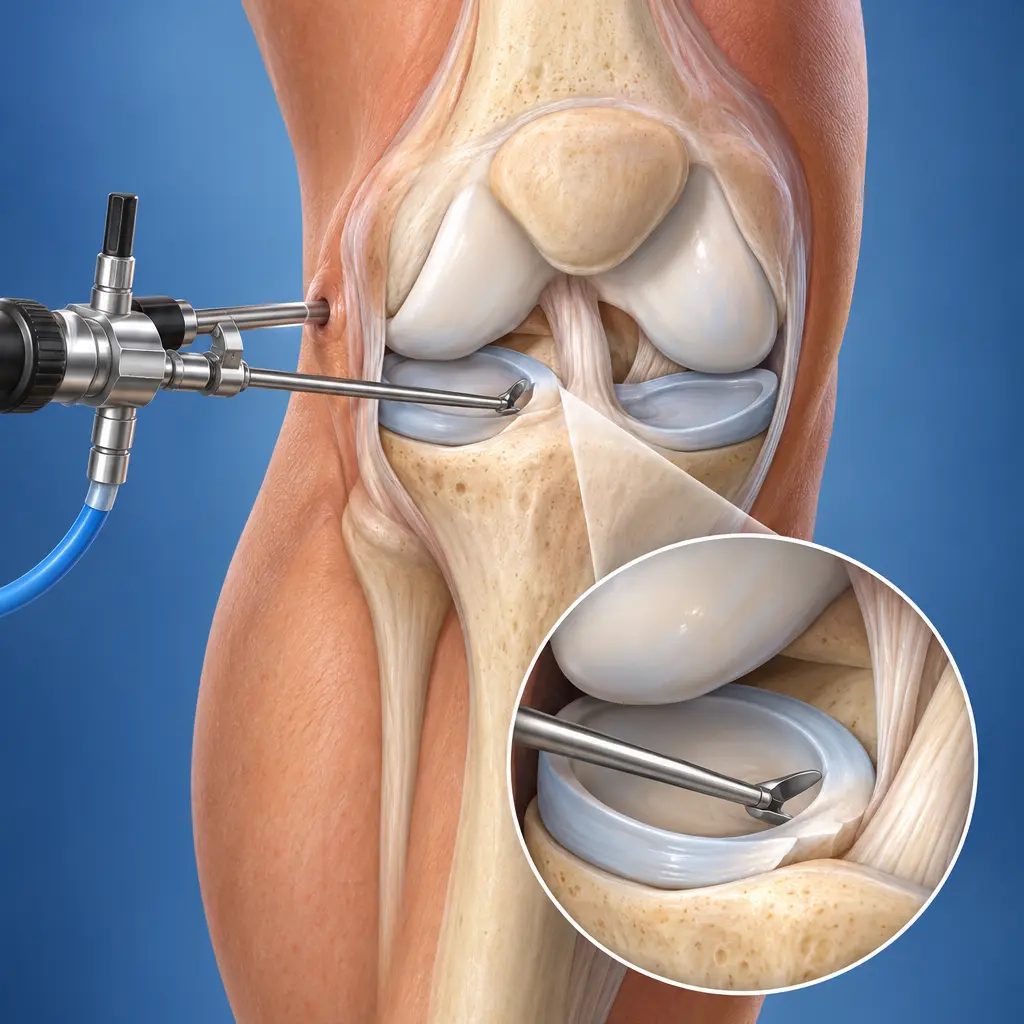
Performing of arthroscope based surgery for knee.
Patient monitoring & Care assessment.
The objective of treatment is to reduce symptoms, preserve healthy meniscal tissue and support restoration of knee function.
Helps retain natural role of meniscus.
Improve functional stability during movement.
Address restricted movement associated with injury.
Support a gradual return to daily activities.
Recovery does not end after the procedure. Appropriate protection, rehabilitation and follow-up are important for regaining knee function.
Speak With Our Orthopaedic TeamProgressive exercises improve knee movement.
Maintain weight-bearing timing as instructed.
Step by step activity as recovery progresses.
Avoiding excessive exercise during healing.
Answers to common questions about Hip Replacement, recovery and after-care.
Some meniscus tears can be managed without surgery, particularly when symptoms are manageable and the knee does not have significant mechanical problems.
No. Depending on the injury, treatment may include activity modification, medication, physiotherapy and other non-surgical measures.
When the tear is suitable for repair, preserving the meniscus is generally preferred. However, repair is not appropriate for every tear.
Recovery varies according to the type of procedure. Rehabilitation after meniscus repair generally takes longer than after removal of a small damaged portion because the repaired tissue needs time to heal.
Physiotherapy is commonly an important part of rehabilitation. It helps progressively restore movement, strength, balance and functional knee control.
Choose the consultation option that works best for you.