URSL (Ureteroscopic Lithotripsy) Surgery for Ureter Stone Removal
URSL is a minimally invasive procedure used to treat stones located in the ureter. The overall process is minimally invasive and has high success rate.
If you have persistent ureter stone pain, urinary obstruction or a stone that is unlikely to pass naturally, consult a Urology specialist for appropriate evaluation and treatment planning.


Treatment Starts With the Right Stone Assessment
Every ureter stone requires an individual treatment plan & proper assessment of stone by urology specialist can help to determine the requirement of the surgery.
Dr. S. K. Baishya
What is URSL?
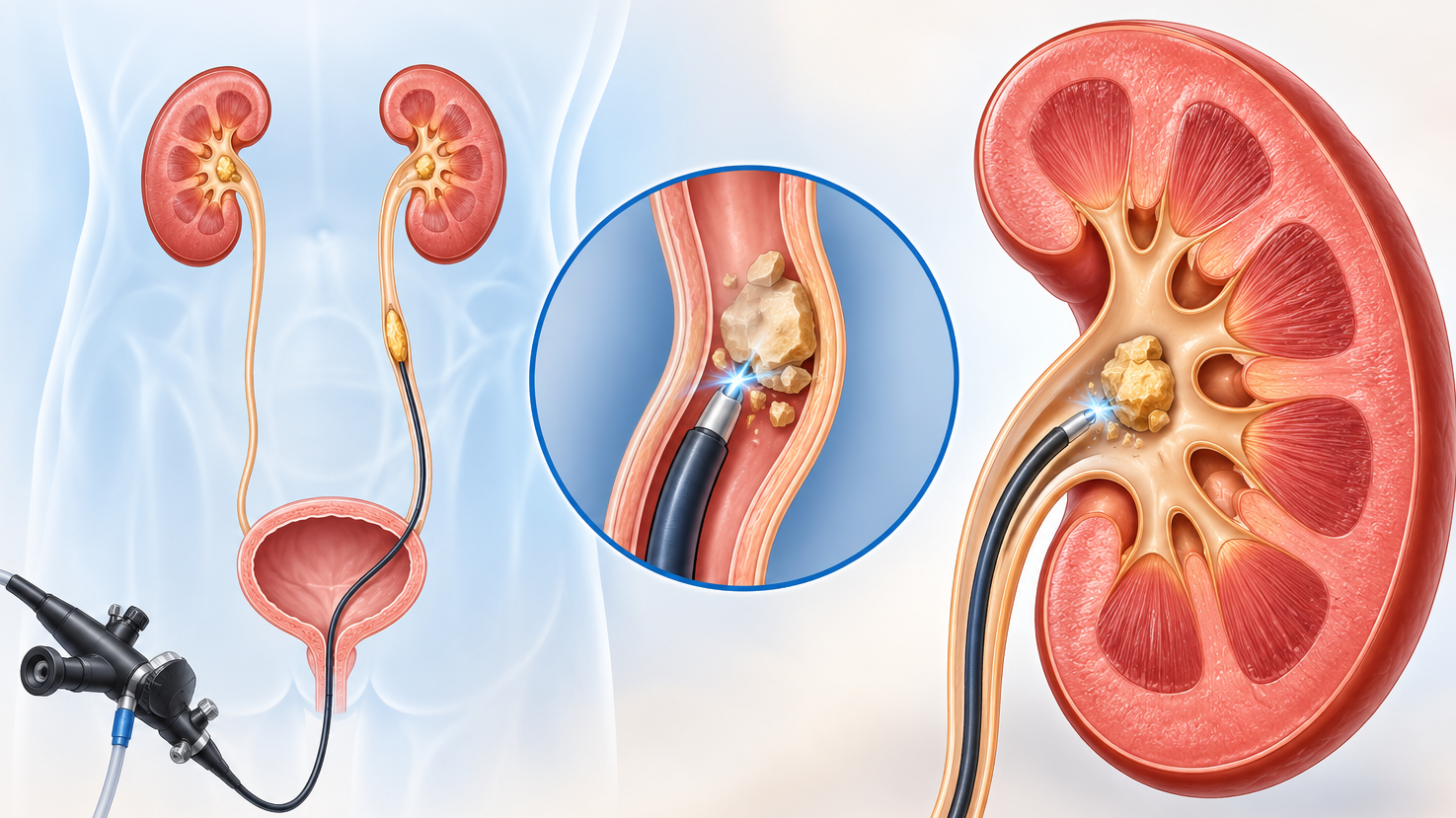
Ureteroscopic Lithotripsy (URSL) is a minimally invasive procedure for treating stones located within the ureter.
During the procedure, a thin instrument called a ureteroscope is guided through the urinary passage towards the stone. The surgeon directly visualises the stone and uses specialised equipment to fragment it into smaller pieces.
The fragments may then be removed using appropriate instruments, depending on their size and clinical situation.
- During URSL ureteroscope is passed through the natural urinary passage.
- Helps in locating the ureter stone under direct vision.
- It fragmented the stone into smaller pieces.
- Removed accessible stone fragments.
- Placed a temporary ureteral stent when clinically required.
When May URSL Be Considered?
URSL may be considered when a ureter stone requires active treatment because of its size, location, symptoms or effect on urinary flow.
Stones Causing Pain
Persistent or recurrent stone-related pain.
Urinary Blockage
Obstructing urine flow.
Impacted ureteral stones
Larger or unfavourably positioned stones.
Persistent Ureter Stones
Stone that are coming back.
Failed Previous Stone Treatment
Residual stones need another treatment.
Symptomatic Ureter Stones
Repeated urinary or stone-related symptoms.
When Should You Consult an Urologist?
A ureter stone can sometimes cause significant discomfort or interfere with normal urine flow. Persistent symptoms should be evaluated by a specialist rather than repeatedly managed without identifying the underlying cause.
Schedule a Urology ConsultationSymptoms that need medical attention
The URSL Treatment Pathway
A structured treatment process allows the surgical team to assess the stone, plan access and manage the procedure according to individual requirements.
Ready to live a pain-free life?
Recurring ureter stone pain or urinary obstruction should not be ignored. If you have been diagnosed with a ureter stone, specialist evaluation can help determine whether URSL is an appropriate treatment option.
What to Expect During URSL?
Your treatment journey begins with understanding the stone and continues through procedure planning, stone removal and follow-up care.
Hospital Admission
Easy admission & vital sign check-up
Pre-surgery Planning
Reviewing of medical history & previous tests.
Anaesthesia Administration
Administration of General or spinal anaesthesia.
URSL Procedure
Ureteroscope-based laser surgery to dust the stone.
Recovery & Follow-Up
Individual treatment guidance and monitor.
A Direct Approach to Ureter Stone Removal
When a ureter stone requires active intervention, URSL provides direct access to the stone through the natural urinary passage.
Direct Stone Visualisation
Direct stone identification by ureteroscope.
Targeted Fragmentation
Accurate fragmentation of the stone.
Direct Fragment Removal
Removal of Suitable stone fragments.
No External Incision
No external surgical cut.
Care Continues After Stone Removal
Following your urologist’s instructions can support recovery and help monitor your urinary system after URSL.
Speak With Our Post-Operative Care TeamFollow Medication Instructions
Taking of prescribed medicines.
Maintain Appropriate Hydration
Drink fluids as recommended by doctor.
Allow Adequate Recovery
Avoid strenuous activities.
Follow Stone-Prevention Advice
Maintain proper dietary and lifestyle guidance.
URSL FAQs
Answers to common questions about the procedure, recovery and after-care.
No. Treatment depends on factors such as stone size, location, symptoms, degree of obstruction and the patient’s overall condition.
Usually plain and non-spicy food is recommendable followed by fruits for easy digestion.
A temporary ureteral stent may be placed when clinically required. The decision depends on the procedure and the patient’s individual condition.
Recovery varies depending on the stone, procedure and individual health. Your urologist will provide personalised guidance regarding your return to routine activities.
Yes. Removing a stone does not prevent future stone formation and appropriate follow-up, hydration and stone-prevention measures may help reduce recurrence.