PCNL (Percutaneous Nephrolithotomy) surgery for kidney stone removal
PCNL is a minimally invasive surgical procedure designed to remove large, hard-to-treat or complex kidney stones through a small access tract into the kidney. It allows the urologist to directly reach the stone, break it into smaller fragments and remove them from the urinary system.
If you have been diagnosed with a large kidney stone, recurrent stone-related pain or others consult an experienced Urology specialist to determine whether PCNL is appropriate for you.
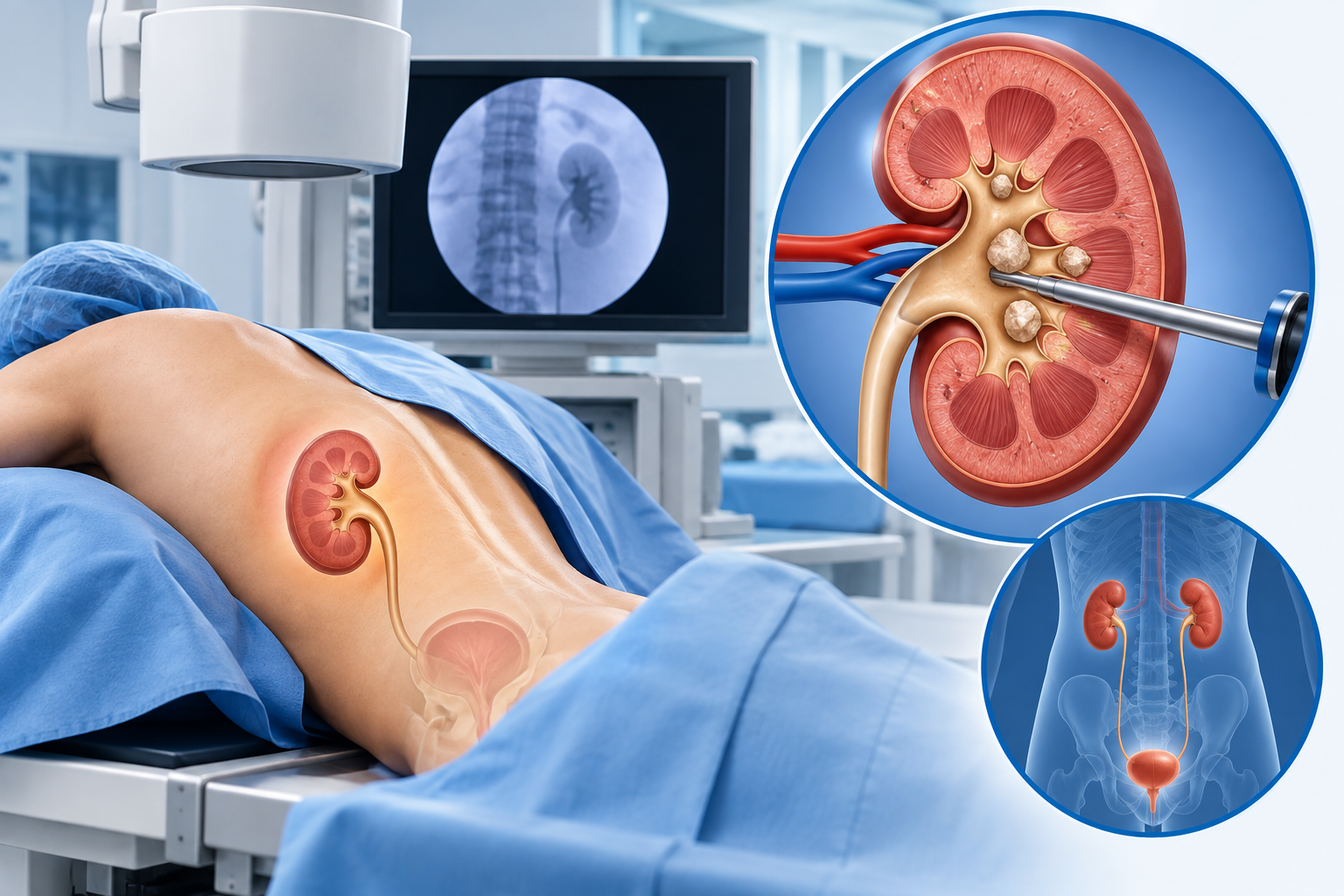

Treatment Journey Begins With Expert Evaluation
A detailed assessment of your stone size, location, number, kidney anatomy and overall health helps the urologist decide whether PCNL is suitable.
Dr. S. K. Baishya
What is PCNL?
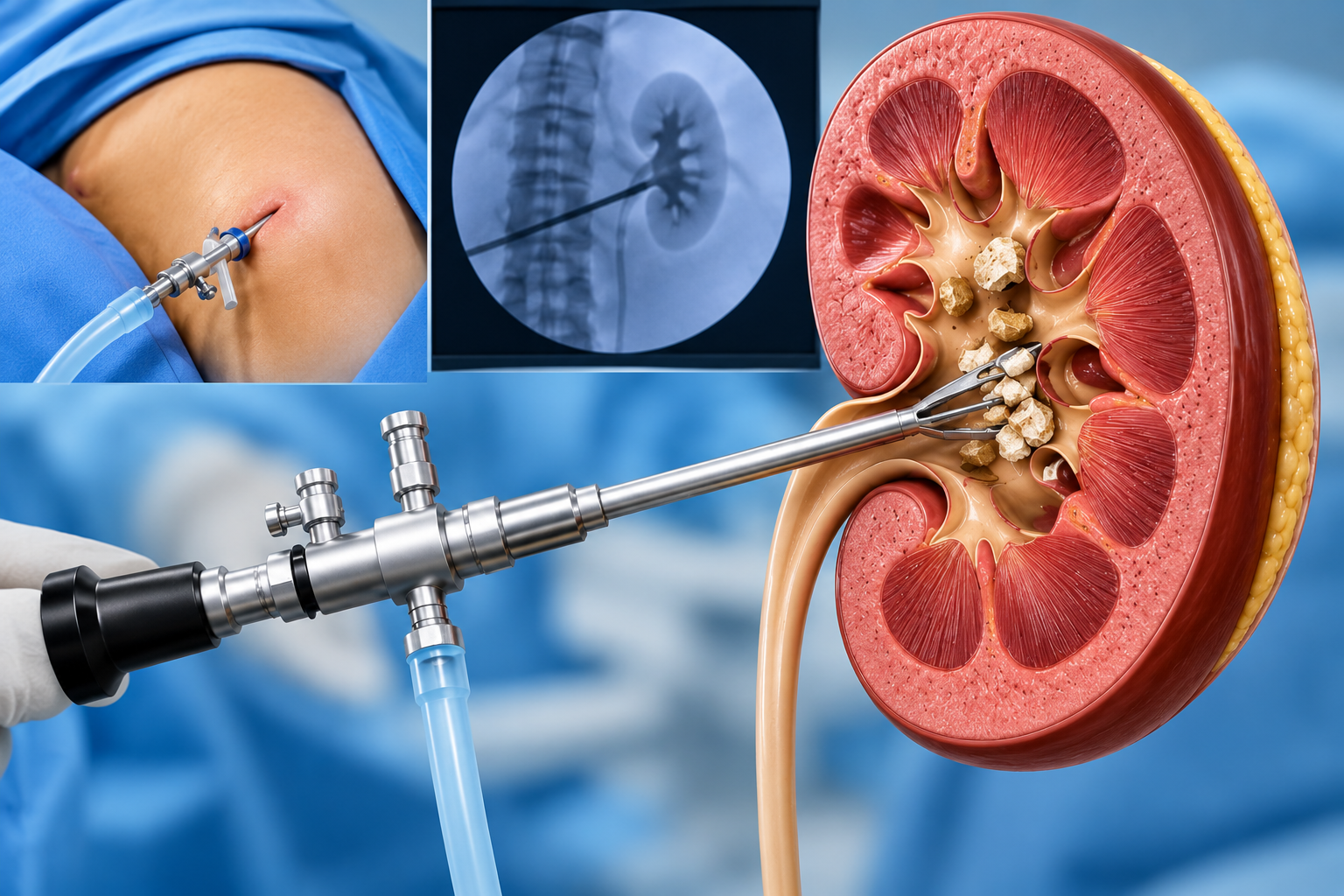
Percutaneous Nephrolithotomy (PCNL) is a minimally invasive procedure used primarily for removing larger or complex kidney stones.
Instead of waiting for a large stone to pass naturally, the surgeon creates a small controlled pathway from the skin into the kidney. A specialised instrument called a nephroscope is then introduced through this pathway to identify the stone.
The stone is broken into manageable fragments using appropriate energy-based technology, and the fragments are carefully removed.
- Small access through the back to reach the kidney.
- Direct visualisation of the stone with a nephroscope.
- Fragmentation of the stone into smaller pieces.
- Removal of stone fragments through the access tract.
- Temporary placement of a nephrostomy tube or ureteral stent when clinically required.
When May PCNL Be Considered?
PCNL is generally considered when the kidney stone is large, complex or unlikely to be effectively managed with less invasive stone-treatment options.
Large Kidney Stones
Larger stones that not suitable for simple treatment.
Multiple Renal Stones
Kidney stones that need direct removal strategy.
Complex Stone Burden
Effective for complex areas stones.
Hard or Dense Stones
Stones resistant to fragmentation
Failed Previous Treatment
Failed previous stone treatment
Obstructive Stone Disease
Stones causing urinary blockage & other issues.
When Should You Consult a Urologist?
Kidney stones can remain unnoticed for some time, but a stone causing obstruction or irritation may produce significant symptoms. Persistent or recurring symptoms should be medically evaluated by an urologist to reduce discomfort.
Schedule a Urology ConsultationSymptoms that require medical attention
The PCNL Treatment Pathway
A carefully planned sequence helps the surgical team manage every stage of treatment—from identifying the stone to monitoring recovery.
Ready to take the next step?
Stop suffering from kidney stone pain can interfere with work, sleep and everyday activities. Contact with us for expert evaluation that can help determine whether PCNL is the appropriate treatment for you.
What to Expect During PCNL?
From the initial assessment to post-operative follow-up, every stage is planned around your safety and recovery.
Hospital Admission
Easy admission formalities & pre-operative investigations.
PRE-Surgical Planning
Assessing of stone & preparation of surgical area.
Pre-Surgery Preparation
Administration of general anaesthesia and patient positioning.
PCNL Procedure
From small incision to stone break to stent placement.
Recovery & Follow-Up
Close monitoring to guided patient discharge.
Direct Surgical Approach for Complex Kidney Stones
Restore your physical health safety. PCNL provides direct access to the kidney so that the stone can be fragmented and removed.
Direct Stone Access
Reaches to stone through a planned percutaneous pathway.
Minimally Invasive
No large surgical incision.
Stone Fragment Removal
Direct removal of stone fragments
Quick Recovery
Less hospital stay hours.
Care Continues After Stone Removal
Successful stone removal is only one part of kidney stone management. Following your urologist’s instructions during recovery can support healing and help monitor your urinary system.
Speak With Our Post-Operative Care TeamStay Well Hydrated
Maintain proper fluid intake.
Follow Medication Instructions
Take prescribed medicines properly.
Avoid Strenuous Activity
Give adequate rest to your body.
Attend Follow-Up Visits
Do not miss post-surgery follow-up.
PCNL FAQs
Answers to common questions about the procedure, recovery and after-care.
A light, balanced food is recommendable for easy digestion and fruits, high-fibre foods can be included as per the doctor’s guidance.
As per guidance from urologist adequate water intake is important based on recovery & other conditions.
No. Treatment depends on the stone’s size, location, number, composition, kidney anatomy and the patient’s overall condition.
A nephrostomy tube or ureteral stent may be placed temporarily when required.
Recovery varies according to the stone complexity, procedure performed and individual health.