
Dr. Dipayan Biswas
MBBS(Cal), MS(ENT) (Cal) (IPGMER/SSKM), Consultant ENT & Head-Neck Surgeon, Specialist in Microlaryngeal Head – Neck Surgery & Endoscopic Sinus Surgery AMRI (Saltlake)
A deviated nasal septum can narrow one or both nasal passages and make breathing through the nose difficult.
Septoplasty is a surgical procedure designed to straighten a deviated nasal septum and improve the available space for nasal airflow.
If you regularly struggle with one-sided nasal blockage, difficulty breathing or other issues an ENT evaluation can help determine whether a deviated septum is responsible.

A proper evaluation helps determine the severity of the damage or injury for better treatment plan.
MBBS(Cal), MS(ENT) (Cal) (IPGMER/SSKM), Consultant ENT & Head-Neck Surgeon, Specialist in Microlaryngeal Head – Neck Surgery & Endoscopic Sinus Surgery AMRI (Saltlake)

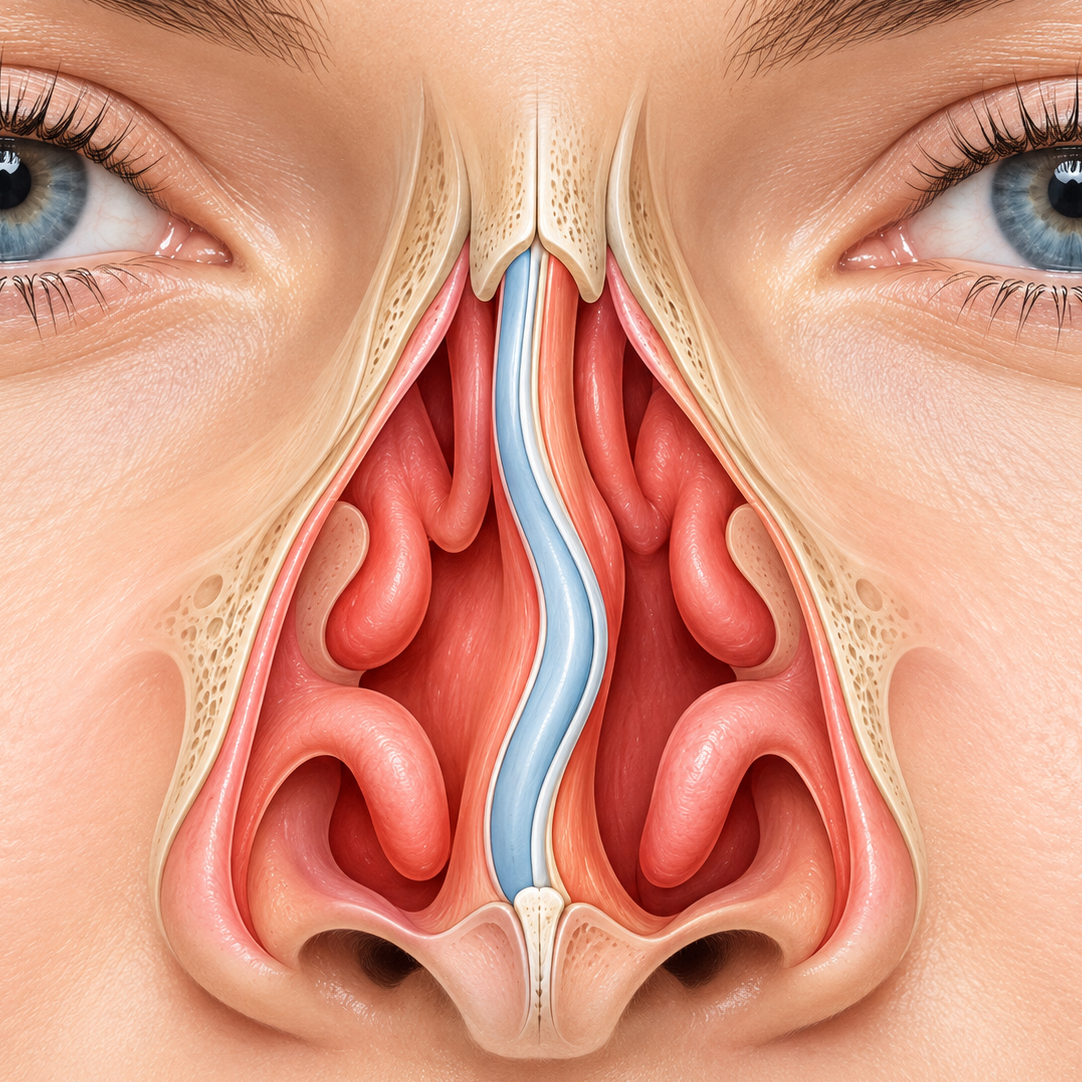
The nasal septum is the internal structure made of bone and cartilage that separates the two nasal passages. It may become displaced to one side because of natural development or an injury to the nose.
A mild deviation may not cause noticeable symptoms. However, a more pronounced deviation can reduce the space available for airflow and contribute to persistent nasal obstruction.
Common Factors Associated With Septal Deviation Are-
A slight bend in the septum may not cause significant symptoms and may not require any specific treatment.
A more pronounced bend can narrow a nasal passage and make comfortable nasal breathing difficult.
Deviation toward the front portion of the septum may directly affect the amount of space available for airflow through the nostril.
In some patients, the turbinate inside the nose may also become enlarged that can further reduce the available nasal airway and may need to be assessed during ENT evaluation.
A deviated septum does not always require surgery & specialist assessment becomes important when nasal symptoms are persistent or affecting daily activities.
Continuous breathing difficulty through nose.
Restriction on one side of the nose.
Nasal obstruction in night time.
Ongoing blockage with no improvement.
Recurrent nosebleeds with infections
Nasal obstruction during exercise.
A detailed ENT examination helps determine whether the nasal septum is deviated and whether the deviation is contributing to the patient’s symptoms. The diagnostic approach depends on the patient’s symptoms and the findings during examination.
Schedule a Detailed Septum EvaluationSeptoplasty is performed to correct a deviated nasal septum by carefully repositioning, reshaping or removing selected portions of bone and cartilage that are contributing to the obstruction.
Persistent nasal blockage can affect sleep, exercise, concentration and everyday comfort. If a deviated septum is contributing to your symptoms, an ENT evaluation can help determine what will be the right treatment.
Your septoplasty journey begins with an ENT consultation and progresses through detailed individual health assessment.
Quick Admission process with initial checks.
Nasal examination & additional investigations.
Administration of the planned anaesthesia.
Correction of the deviated portions.
Monitoring after surgery and recovery care.
For appropriately selected patients, correcting a symptomatic deviated septum may help improve nasal airflow and reduce problems associated with structural nasal obstruction. Results vary according to the patient’s anatomy and other nasal conditions.
Create more space within a narrowed passage.
Improved internal nasal structure for comfortable breathing.
Reduce the persistent sensation of blocked nose.
Septoplasty addresses the structural deviation.
Recovery continues after the surgical procedure. The nasal tissues need time to heal, and temporary congestion or discomfort can occur during the early recovery period.
Following the ENT specialist’s instructions can support proper healing and reduce unnecessary irritation during recovery.
Speak With Our ENT Care TeamUse saline rinses or other nasal care.
Adequate fluid intake is important.
Give your body sufficient time to recover.
Protect the nose from accidents.
Answers to common questions about Hip Replacement, recovery and after-care.
No. Many people have some degree of septal deviation without significant symptoms and do not need surgery.
Septoplasty is commonly performed under general anaesthesia, although the anaesthesia approach depends on the individual procedure and the surgeon’s assessment.
Septoplasty is primarily performed to correct the internal nasal septum and improve nasal function and it is not primarily a cosmetic nose-shaping procedure.
Yes. When the septum is significantly displaced to one side, it can narrow the corresponding nasal passage and make nasal breathing difficult.
Medicines can help reduce nasal swelling caused by conditions such as allergies, but they cannot physically straighten a deviated septum.
Choose the consultation option that works best for you.