
Inguinal Hernia Surgery for Stronger Groin Support
An Inguinal Hernia occurs when tissue from inside the abdomen pushes through a weakened area of the abdominal wall into the groin.
At Medithics Super Speciality Care, Inguinal Hernia is assessed carefully to understand the size and location of the hernia, associated symptoms before deciding on the most appropriate repair technique.
If you notice a groin bulge, heaviness, pulling sensation or pain that becomes worse with physical activity, timely evaluation can help prevent the condition from progressing.
✓
Modern OT
Well-equipped surgical facilities.
+
Specialist-Led Treatment
Treatment by experienced surgical specialists.
♥
Post-Surgical Support
Guidance and follow-up care.
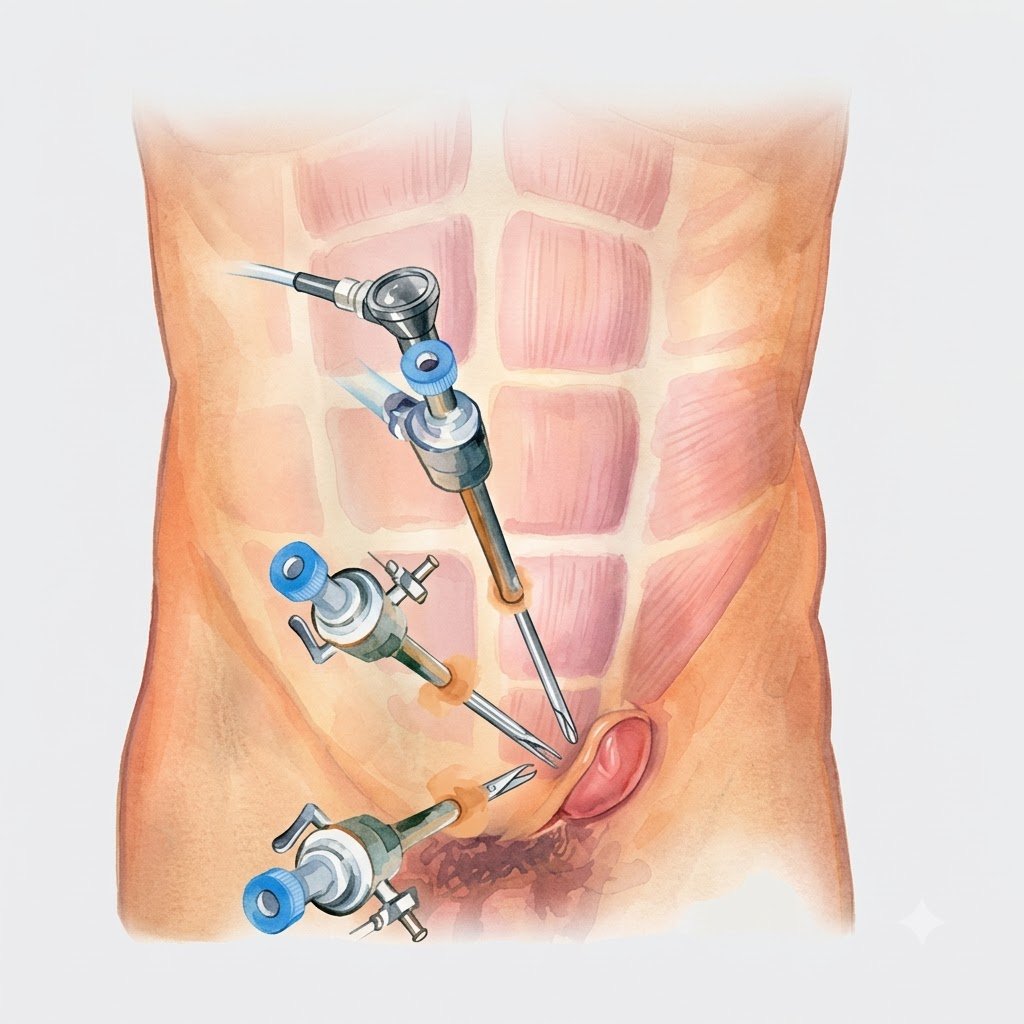
Specialist-Led Hernia Care
Advanced Laparoscopic Repair
✓
Mesh-Based Hernia Reinforcement
Comprehensive Surgical Support
◷
Detailed Hernia Assessment
Evaluation of the illness properly.
♥
Advanced Repair Techniques
Ultra-modern process for individual cases.
✓
Individualised Surgical Approach
Patient-based surgery selection process.
+
Recovery Planning
Clear guidance regarding recovery.
Right Treatment Begins With the Right Diagnosis
Proper evaluation for gastric care can be helpful to decrease the disease progression and live a healthy life.

Dr. Kunal Kumar Gupta
Dr.NB ( Medical gastroenterology) DNB ( General medicine ), MBBS MTI – UK
18 Years Experience


Dr. Debojyoti Chakraborty
MBBS, MD – General Medicine DM – Gastroenterology
15+ Years Experience

What Can Lead to an Inguinal Hernia?
An Inguinal Hernia can develop when there is a weak area in the abdominal wall combined with pressure from within the abdomen. Some hernias may be related to a weakness present from birth, while others develop gradually over time.
It may appear as a visible bulge and can become more noticeable while coughing, lifting, standing or straining.
Common Factors Associated With Inguinal Hernia Are-
- Congenital Weakness in the Abdominal Wall
- Repeated Heavy Lifting
- Persistent Coughing
- Chronic Constipation and Straining
- Previous Abdominal or Groin Surgery
Understanding Inguinal Hernia
Inguinal Hernias are broadly described according to how the hernia develops in relation to the inguinal canal.
Direct Inguinal Hernia
This type develops when abdominal tissue pushes through a weakened area of the abdominal wall in the groin region.
Indirect Inguinal Hernia
This occurs when tissue passes through the inguinal canal along a pathway associated with the descent of the testicle during development.
Unilateral Hernia
The hernia develops on one side of the groin and may appear as a swelling on the right or left side.
Bilateral Hernia
Hernias may occur on both sides of the groin, requiring assessment of each side before treatment planning.
When Should You Consult an Inguinal Hernia Specialist?
A new or persistent groin swelling should be evaluated, particularly when it becomes painful or starts affecting routine activities.
01
Groin Bulge
A noticeable swelling may develop in the affected area.
02
Groin Discomfort
A dragging, pulling or heavy sensation in the affected area.
03
Pain During Activity
Discomfort during different activities.
04
Swelling That Changes With Position
Changes of bulge swelling when standing.
05
Changes of bulge swelling when standing.
Experience of e irritation, pressure around the groin.
06
Increasing Size of the Bulge
Gradual hernia size increase over time.
How Is an Inguinal Hernia Diagnosed?
A proper diagnosis helps the surgeon confirm the presence of a hernia and understand its location and clinical characteristics. Based on the symptoms, the overall evaluation might include various assessments which effectively diagnose the progression of the illness.
Schedule a Detailed Hernia EvaluationTests & Examinations Used When Required
●
Medical History
●
Physical Examination
●
Groin Examination While Standing
●
Cough or Strain Assessment
●
Abdominal Ultrasound
●
CT Scan
●
MRI in Selected Cases
●
CECT of Abdomen
How Is Inguinal Hernia Treated?
Treatment depends on the size of the hernia, symptoms, progression and the patient’s overall health. The surgeon also consider the type of treatment that will be suitable as per the symptoms of the illness.
01
Observation & Monitoring
Applicable for some small hernias with minimal symptoms.
02
Open Hernia Repair
Open surgical process for complicated cases.
03
Laparoscopic Hernia Repair
Minimally invasive surgical method to repair hernia.
04
Mesh Reinforcement
Addition of structural support during hernia repairs.
05
Individualised Surgical Planning
Patient-based surgical planning for quick cure.
Ready to Take the Next Step Towards Inguinal Hernia Relief?
A persistent groin bulge or recurring discomfort should not be ignored. Getting the condition evaluated early can help understand the extent of the hernia and the treatment options suitable for you.
What Happens During Laparoscopic Inguinal Hernia Surgery?
Your surgical journey begins with a detailed assessment and preparation based on your individual health condition.
01
Hospital Admission
Patient registration and final pre-operative evaluation.
REGISTRATION – 45 mins
02
Pre-Procedure Preparation
Review & analysis of medical history & surgery preparation.
ASSESS – 20–30 mins
03
Anaesthesia Administration
Administration of General anaesthesia before surgery.
PREPARATION – 30 mins
04
Hernia Repair
With small incisions & laparoscopic camera surgery is done.
OPERATE – 45–60 mins
05
Recovery & Observation
Patient monitoring, observation & discharge.
DISCHARGE – 2-3 days (as guided)
Benefits of Laparoscopic Inguinal Hernia Repair
For appropriately selected patients, laparoscopic repair offers a minimally invasive approach using small incisions. The suitability of the technique is determined after individual surgical assessment.
✓
Small Surgical Incisions
No requirement of larger conventional incision.
+
Reduced Tissue Disruption
The laparoscopic approach limits surgical access extent.
◉
Targeted Hernia Repair
Specific surgery through using laparoscopic camera.
↗
Earlier Return to Routine
Recovery allow gradual return to normal activities.
Care That Continues Beyond Hernia Surgery
Recovery begins immediately after the procedure and continues at home. The time required to resume normal activities varies according to the surgical approach, individual healing and the nature of the hernia repair.
Following your surgeon’s instructions can help support a smooth recovery.
✓
Follow Wound-Care Instructions
Follow proper dressing guidance.
💧
Maintain Healthy Bowel Habits
Adequate fluids and a suitable diet are important.
◷
Walk Gradually
Light movement is encouraged as advised.
+
Attend Follow-Up Appointments
Do not miss scheduled check-up.
Hernia Surgery FAQs
Answers to common questions about the procedure, recovery and after-care.
Can an Inguinal Hernia heal on its own?
+
In selected patients with minimal symptoms, a surgeon may recommend monitoring for a period, while symptomatic or progressing hernias may require surgical repair.
Is surgery necessary for every Inguinal Hernia?
+
Not every patient requires immediate surgery & the decision depends on symptoms, hernia characteristics, progression and the individual’s overall health.
Is mesh used during Inguinal Hernia Surgery?
+
A surgical mesh may be used to reinforce the weakened abdominal wall during appropriate hernia repairs. The surgeon decides whether mesh reinforcement is suitable for the individual case.
Can an Inguinal Hernia come back after surgery?
+
Recurrence is possible after hernia repair, although the risk varies according to factors such as the type of hernia, surgical technique, tissue characteristics and individual healing.
When can I return to normal activities after surgery?
+
The timeline varies from patient to patient & light activities may usually be resumed gradually, while heavy lifting and strenuous exercise should be avoided until the surgeon provides clearance.